


 JA
JA
TOPICS & NEWS
2026.03.30
As Japan advances toward decarbonization while seeking to stabilize its power supply-demand balance, the restart of nuclear power plants is once again gaining prominence.
Among these, the Kashiwazaki-Kariwa Nuclear Power Plant in Niigata Prefecture — one of the largest nuclear power facilities in the world — stands as a symbolic cornerstone of Japan’s energy policy. In 2026, Unit 6 is expected to move toward restart, with the potential to significantly impact the country’s future energy supply structure.
However, the restart process has not been without challenges. Reports indicate that shortly after reactivation, alarms related to control rod systems were triggered, leading to a temporary shutdown. Similar issues, including past control system irregularities and operational response concerns, have also been documented.
These developments highlight that ensuring technical reliability and operational stability remains a critical issue, even as nuclear power re-enters the energy mix.
The Convergence of Power and Data: A New Paradigm for Site Selection
Amid these developments, increasing attention is being directed toward the concept of “power-proximate data centers.”
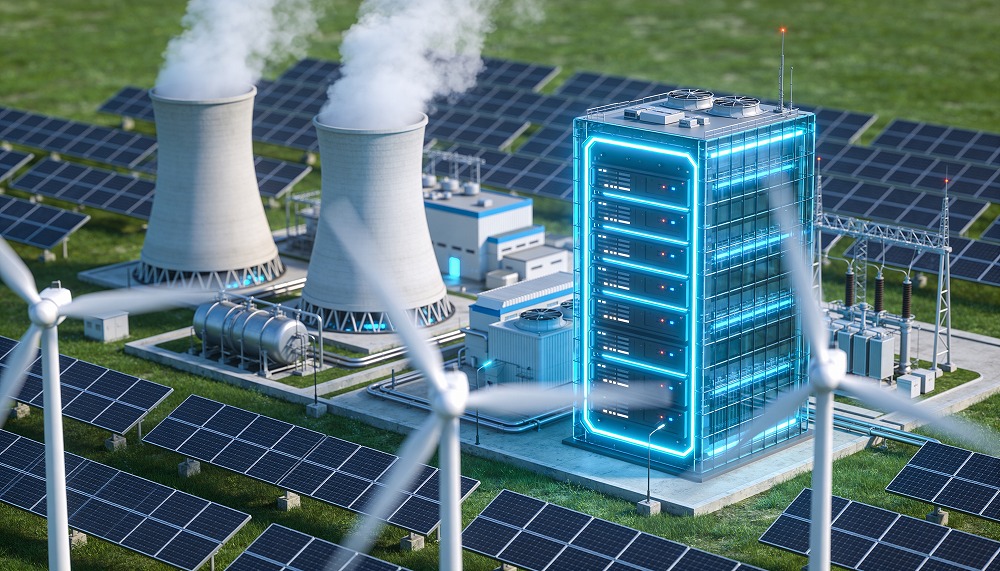
Driven by the rapid expansion of AI, data center power demand is surging, elevating the importance of locations capable of securing large-scale, stable electricity supply. In the Kashiwazaki area, there are already reports of potential data center developments leveraging nuclear-generated power, signaling a growing movement toward integrating energy production with digital infrastructure.
This emerging model is often referred to as “Watt-Bit Integration” — an approach that optimizes both electricity (watts) and data (bits) simultaneously.
Locating data centers in close proximity to power generation sites offers several advantages:
- Reduced transmission losses
- Lower infrastructure costs
- Enhanced supply stability
Such a structure is also expected to serve as a new model for regional industrial clustering, effectively redefining the value proposition of nuclear-hosting regions.
Beyond Kashiwazaki: Scaling a Nationwide Opportunity
This trend is unlikely to remain confined to Kashiwazaki. It has the potential to extend to other nuclear-hosting regions and areas with concentrated power and network infrastructure.
Cities such as Tsuruga, Satsumasendai, and regions around Takasaki, where energy grids and telecommunications infrastructure intersect, present viable opportunities for similar data center developments.
The restart of nuclear power plants is therefore no longer solely an energy policy issue — it is increasingly intertwined with the location strategy of next-generation infrastructure, including data centers.
At the same time, key challenges remain:
- Building trust in stable and safe operations
- Achieving social acceptance and consensus
Conclusion: A Structural Shift in Infrastructure Strategy
Against this backdrop, the expansion of data centers anchored in nuclear-hosting regions represents a potentially transformative shift in Japan’s infrastructure landscape.
How this model evolves — balancing energy policy, technological reliability, and regional development — will be a critical area to watch as Japan seeks to align its decarbonization goals with the rapid growth of digital infrastructure demand.


dil_admin
TOPICS & NEWS
Related Post

Japan’s GX Strategy Enters Implementation Phase: ~90 Expressions of Interest Received in Initial Call

At the Intersection of Power Infrastructure and Digital Foundations

SoftBank Accelerates Data Center Strategy for the AI Era — Pioneering the Future of Digital Society through Infrastructure Innovation —

KDDI Launches Osaka Sakai Data Center: A Strategic Leap into AI-Driven Digital Infrastructure

Goodman Accelerates Data Center Development Across Japan

Review of the 2025 Data Center Market: A Year Defined by Diverse Players and Dynamic Growth